CYPRUS
STEFANOS KOURATZIS
The inspiration for this approach is drawn from Ayesha Ahmad’s work, as the modus operandi, though seemingly different perspectives and approaches, creates an interesting and intriguing visual and conceptual correspondence. The plastic wrap around the raw stone, almost unwilling, generates its own folds, as if attempting to mimic the sculptural artistry of an ancient Greek statue.
This act of covering the raw stone could be an attempt either to hide its inherent beauty and sacredness while generating new folds or even strategically to protect it from the passage of time. And the two stones by its side, one acts as support and the other is distant from the event.
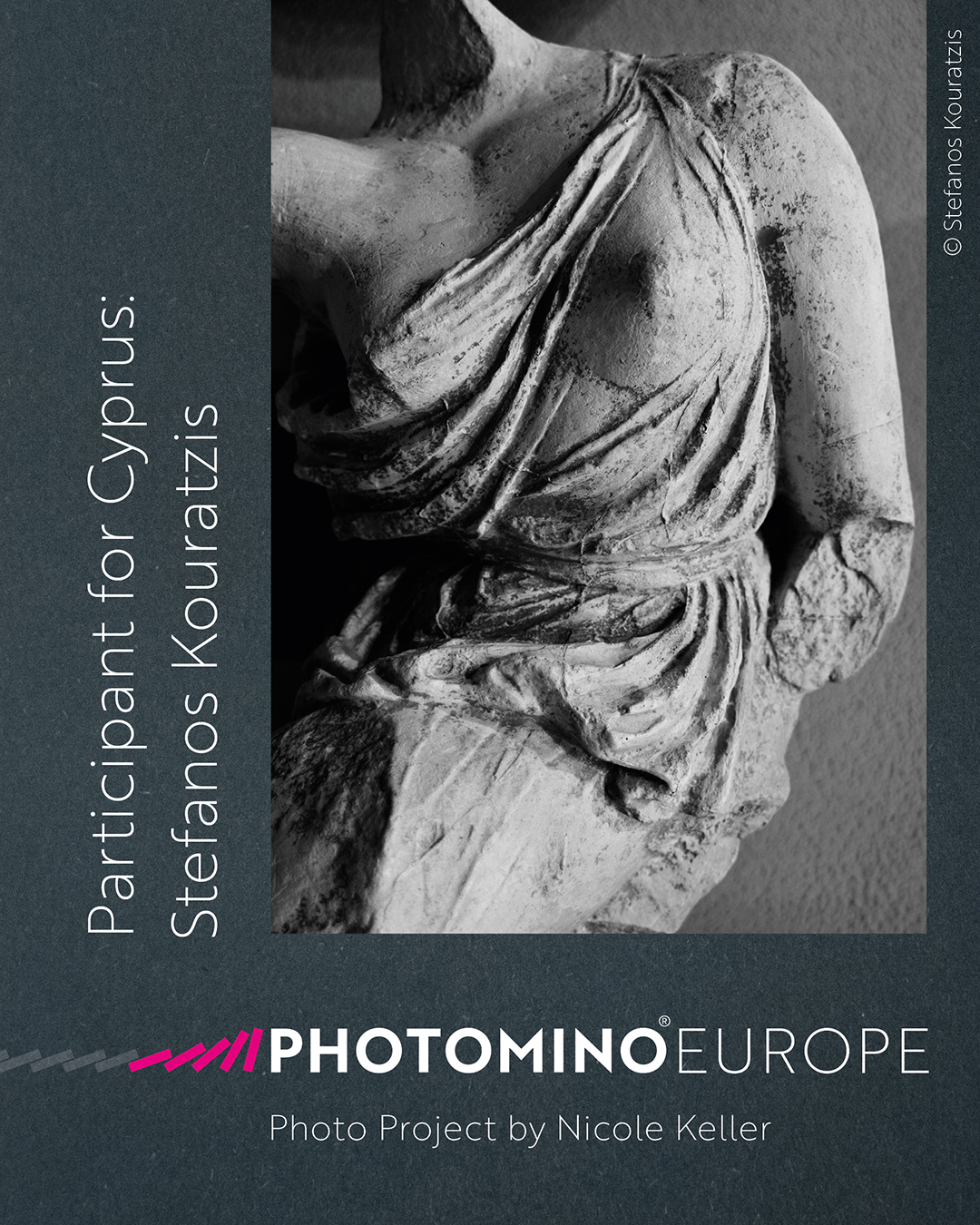
The conversation of the two images is rooted in the eternal dialectics between matter, form, and history. The axis is based on the interplay of classical and contemporary aesthetics.
The aesthetics of absence and detachment, coupled with the themes of memory and oblivion, are instantly evidential in the marble fragment. The torso, with the folds of the chiton dominating the composition, underlines the vulnerable yet eternal substance of the human form thus the naked breast. They stand apart from each other, one in colour and almost detatched while the other is in a tight black and white frame.
The almost sterile, intense, studio lighting of the stone wrapped in plastic, highlights the sense of artificial intervention, sharply contrasting this condition with the natural, historical light that embraces the marble.
This morphological equivalence of the folds, from enduring marble to ephemeral plastic, establishes the central conceptual core, bridging the historical trauma of the past with the ecological crisis of the present.